

Vibe-Coded Sites Have Hidden SEO Defects: Here Is How to Find Them
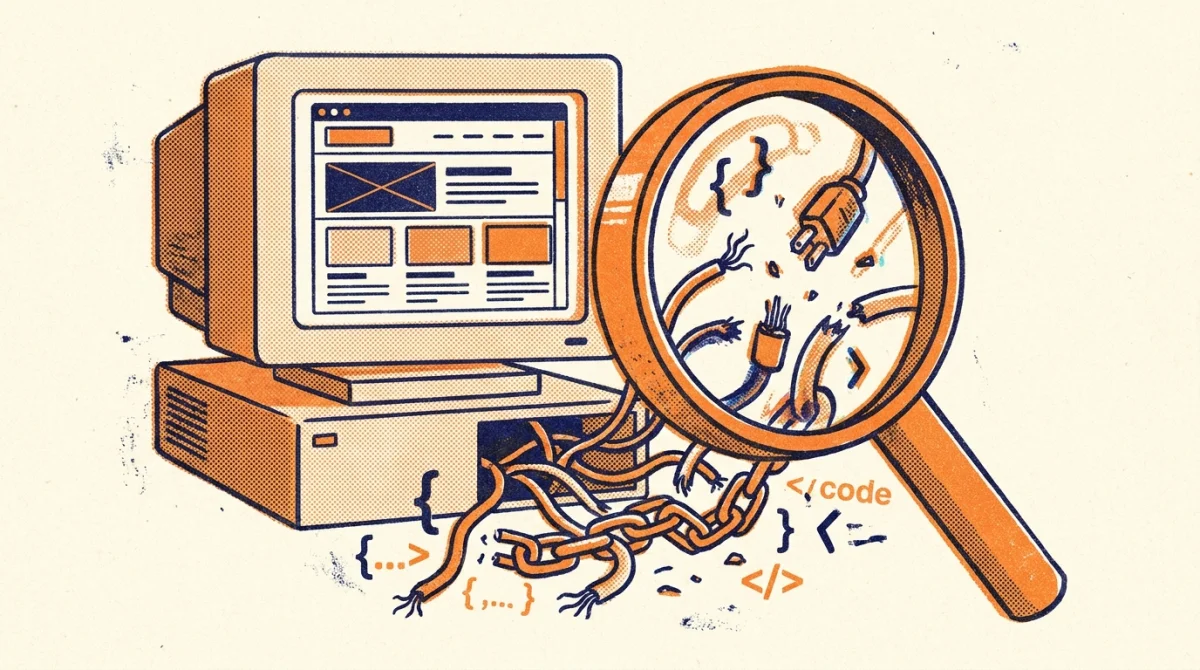
Vibe coding is having a moment, and honestly it deserves one. You describe what you want, an AI assistant or a no-code builder assembles it, and a few hours later you have a real, working site that would have taken a week by hand. Speed like that is not a gimmick. It lets people ship ideas who never could before, and it lets the rest of us skip the boring scaffolding.
Here is the part nobody puts on the landing page, though. Speed buys you a site that works in the browser. It does not buy you a site that works in the crawl. Those are two different machines reading your page, and the gap between them is exactly where vibe-coded sites quietly lose their search visibility. The page looks finished, it feels finished, and a crawler walks through it and finds a list of defects that no human clicking around would ever notice.
This is not an argument against building fast. It is an argument for looking at what you built the way a search engine does, before you assume it is done.
Why the Browser Lies to You
When you open your own site, you are the best possible visitor. You land on the homepage, you click the links you know work, you read text that your browser has already finished rendering, and everything looks correct. That experience is reassuring and almost entirely useless as a quality check.
A crawler does none of that. It does not start from your mental model of the site. It follows every link it can find, requests every URL cold, reads the raw HTML before any of your JavaScript has run, and keeps a tally of everything that is broken, missing, or contradictory. The reason vibe-coded sites are a special case is not that the tools are bad. It is that generated code optimizes for “renders correctly on screen right now,” which is a much lower bar than “is coherent and discoverable for a machine that never sees the screen.”
So the defects below are not exotic. They are the ordinary cost of building for the browser and forgetting the crawl.
The Defects Vibe Coding Tends to Leave Behind
These are the patterns that show up again and again when you actually crawl an AI-built or no-code site.
- Broken and circular internal links. Generated navigation loves to point at routes that were renamed, removed, or never existed, and to build redirect loops between near-identical paths. In the browser you never click them, so you never see them. A crawl hits every one. This alone is worth a pass with a tool built to find and fix broken links before anything else.
- Missing or duplicated metadata. Many builders stamp the same title and description onto every page, or leave them empty and fall back to a generic site name. To a search engine, fifty pages with one title look like one page with a duplication problem, not fifty distinct results.
- Canonical tags pointing at the wrong place. Auto-generated canonicals frequently point every page at the homepage, or at a staging URL, or at themselves with the wrong protocol. A single wrong canonical can tell Google to ignore the exact page you wanted ranked.
- Content that only exists after JavaScript runs. This is the big one. If your text, your links, or your headings are injected by client-side script, the raw HTML a crawler reads first can be nearly empty. The page is gorgeous on screen and blank to a bot. This is the heart of JavaScript SEO and rendering, and vibe-coded SPAs walk into it constantly.
- Orphan pages. The builder generates a URL, but nothing on the site actually links to it. It exists, it is real, and it is invisible to any crawler that discovers pages by following links. Whole sections can sit unreachable this way.
- Robots and sitemap accidents. A default
robots.txtleft in “block everything” from the template, a sitemap that lists dead or staging URLs, anoindexquietly applied site-wide by a setting nobody touched. Small files, enormous consequences. - Bloated, duplicated DOM. Generated markup tends to nest wrappers inside wrappers and repeat the same blocks, which inflates page weight and buries the actual content signal. It still renders fine. It just makes the page slower and harder to read for a machine.
Notice the thread running through all of these. Not one of them is visible to you, the proud owner, clicking around your own site. Every single one is obvious to a crawler in minutes.
Fast to Build Is Not the Same as Easy to Find
This is the honest tension at the center of vibe coding, and it is worth saying plainly. The whole promise is that you do not have to understand the machinery underneath. That is genuinely freeing. But search visibility is precisely a property of that machinery, the part you were encouraged to ignore. You can ship a beautiful site in an afternoon and have it be functionally undiscoverable, and nothing in the build process will warn you, because everything looks right on the only screen you ever check: your own.
The fix is not to slow down or to hand-code everything. It is to add one step that the browser can never give you. Build fast, then look at the result through the eyes of the thing that decides whether anyone finds it.
How to Actually Find These Defects
You find them the same way a search engine does: by crawling your own site. A crawler starts at your homepage, follows every link, requests every URL, reads the raw pre-JavaScript HTML, and hands you the full list, the broken links, the duplicate titles, the wrong canonicals, the pages with no real content in the source, the orphans, the robots and sitemap mismatches. It turns a vague worry into a concrete checklist you can work through.
If you have never done this, start with the complete guide to SEO crawlers to understand what the tool is looking at, then run your own site through a free crawler and read the report honestly. For the broader picture once the crawl surfaces issues, the technical SEO audit checklist walks through fixing them in priority order. None of this asks you to abandon how you built the site. It just adds the one perspective the build never gave you.
Vibe coding got you a working site at a speed that used to be impossible, and that is a real win. Crawling it is how you make sure the speed did not come at the price of being found. Build fast, then look at it the way the search engine will, and fix the handful of things only the crawl can see.
Looking for something else?
Search every guide on the blog without going back to the list.